Table Of Content

Both are extremely user-centric and driven by empathy, and UX designers will use many of the steps laid out in the Design Thinking process, such as user research, prototyping and testing. Because applying Design Thinking in a lean, agile environment helps to create a product development process that is not only user-centric, but also highly efficient from a business perspective. While it’s true that each approach has its own modus operandi, there is also significant overlap.
How do companies build a design-driven company culture?
The idea is to challenge any assumptions or biases teams have, instead using their customer perspective as a guiding source. This is important because it aligns the team on what needs to be considered during the rest of the design thinking process. Design thinking is a solution-based framework, so the focus is on coming up with as many ideas and potential solutions as possible. Ideation is both a core design thinking principle and a step in the design thinking process. The ideation step is a designated judgment-free zone where participants are encouraged to focus on the quantity of ideas, rather than the quality.
What is the Design Thinking? Definition, Importance, Examples, and Process
Empathy is crucial to design thinking because it allows designers to set aside your assumptions about the world and gain insight into users and their needs. Tim Brown also shows how design thinking is not just for everybody—it’s about everybody, too. The process is firmly based on how you can generate a holistic and empathic understanding of the problems people face. Design thinking involves ambiguous, and inherently subjective, concepts such as emotions, needs, motivations and drivers of behavior. In light of their findings, MLP opened up a new office space in a student district, putting their editorial and social media teams in close proximity to their customer base.
Design thinking process
Innovative Leadership: Using design thinking and AI with Lego six bricks for CXO thought leadership - ET - ET Edge Insights
Innovative Leadership: Using design thinking and AI with Lego six bricks for CXO thought leadership - ET.
Posted: Wed, 06 Dec 2023 08:00:00 GMT [source]
Don Norman, a pioneer of user experience design, explains why the designer’s way of thinking is so powerful when it comes to such complex problems. Design teams use design thinking to tackle ill-defined/unknown problems (aka wicked problems). Alan Dix, Professor of Human-Computer Interaction, explains what wicked problems are in this video. In conclusion, the relevance of systems models in the IT domain cannot be overstated.
What Is Empathy and Why Is It So Important in Design Thinking?
You might consider developing your communication, innovation, leadership, research, and management skills, as those are often listed alongside design thinking in job postings and professional profiles. If you want to learn design thinking, take an active role in your education. Start polls, problem-solving exercises, and debates with peers to get a taste of the process. It’s also important to seek out diverse viewpoints to prepare yourself for the business world. Design thinking is an extension of innovation that allows you to design solutions for end users with a single problem statement in mind.
References & Where to Learn More
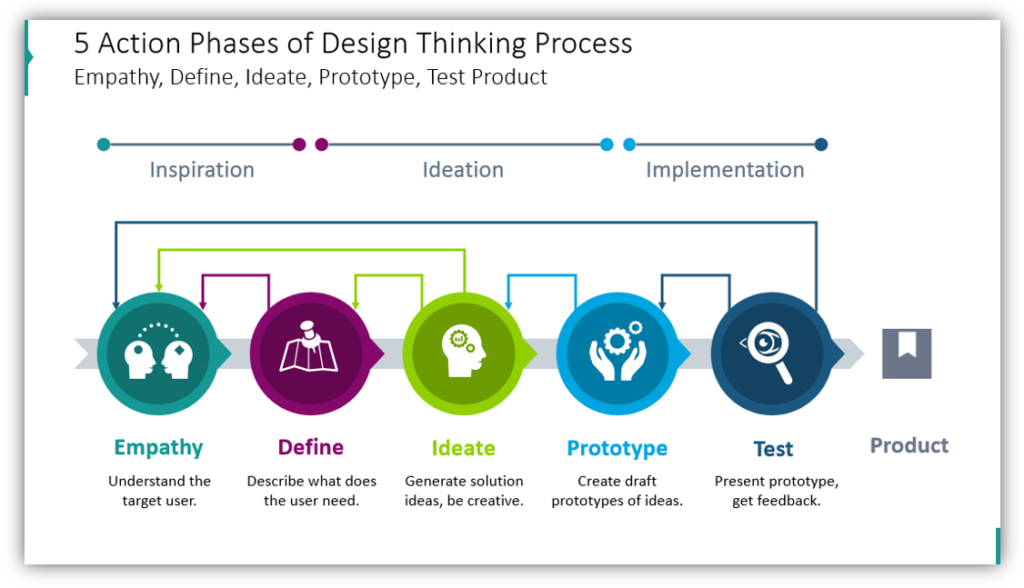
The Design Thinking process puts the needs and requirements of the user first. The first stage of the process is dedicated to building empathy with your target users and understanding their needs, expectations, and behaviors. The principles of DTV have evolved into design for value and growth (D4VG), a new way of creating products that provide exceptional customer experiences while driving both value and growth. Done right, D4VG efforts generate products with the features, form, and functionality that turn users into loyal fans.
These are reflected in the design thinking methodology, which we’ll explore in detail a little later on. We’ve outlined five of design thinking’s most important principles below. If you’re a designer, an entrepreneur, or any kind of employee, you are no stranger to the constant pressure to innovate. Our capacity for innovation—the ability to conceive ideas which are at once actionable and effective—is what gives us the upper hand in competitive industries. You can also pursue an online course or workshop that dives deeper into design thinking methodology. This can be a practical path if you want to improve your design thinking skills or require a more collaborative environment.

Design thinking helps us adopt a customer-centric approach by ensuring that we're focused on the right problems. This helps us have the biggest impact on the company’s long-term growth while creating the most value for our users. The round robin brainstorming exercise is a collaborative session where every person contributes multiple ideas. This is a great way to come up with lots of different ideas and solutions in the ideation stage of design thinking, where you’re focusing on quantity and creativity. To get the most out of a design thinking exercise, you’ll need a collaborative and creative mindset within your team.
Use insights from Recordings, Heatmaps, Surveys, and Feedback to learn what your users need—and build a product that fits right in. The final building block of the design thinking methodology is to consistently and cyclically take action. When user empathy is at the core of product development, everyone wins. CareerFoundry is an online school for people looking to switch to a rewarding career in tech. Select a program, get paired with an expert mentor and tutor, and become a job-ready designer, developer, or analyst from scratch, or your money back. We also recommend checking out this excellent collection of resources for getting started with Design Thinking provided by the d.school (Hasso Plattner Institute of Design at Stanford University).
It can be applied to various types of problems inside and outside product design, and works to be solution-based rather than problem-based. So many companies say they’re “customer focused,” but lack a clear understanding of what really matters most to their customers in the context of their product or service. Design thinking puts the user front and center, with the Empathize stage dedicated to understanding and discovering user needs.
Once you’ve synthesized your findings, you’ll formulate what’s known as a problem statement. A problem statement—sometimes called a point of view (POV) statement—outlines the issue or challenge you seek to address. Aside from dedicated workshops, Design Thinking can also be an embedded process—an overarching framework that informs how you make decisions and devise certain strategies. One way to apply the Design Thinking process is through a Design Thinking workshop.
Design Thinking is defined as a human-centered approach to innovation and problem-solving that prioritizes understanding the needs of users, generating creative solutions, and iterating through rapid prototyping and testing. It originated in the field of design but has since been adopted by various industries and disciplines as a powerful methodology for addressing complex challenges and driving innovation. Accounting for each step of the design thinking process can require extensive time, resources and expertise, making it possibly less-than-ideal for fast-paced business environments. Design thinking prioritizes gathering qualitative, often-interview based data in the ‘empathize’ phase of its process, which can take more effort to accomplish than using quantitative insights. Repeating prototyping and testing phases until finding the best solution can also demand more time than only carrying out one testing stage. The “empathize” stage of the design thinking process involves learning about customers’ challenges.
Design thinking means fundamentally changing how you develop your products, services, and, indeed, your organization itself. It is important to note the five stages of design thinking are not always sequential. They do not have to follow a specific order, and they can often occur in parallel or be repeated iteratively. The stages should be understood as different modes which contribute to the entire design project, rather than sequential steps.
By the end of the define phase, you will have a clear problem statement to guide you throughout the design process. User-centered design is great for developing a fantastic product or service. In the past, a company could coast on a superior process or product for years before competitors caught up. But now, as digitization drives more frequent and faster disruptions, users demand a dynamic mix of product and service.


No comments:
Post a Comment